
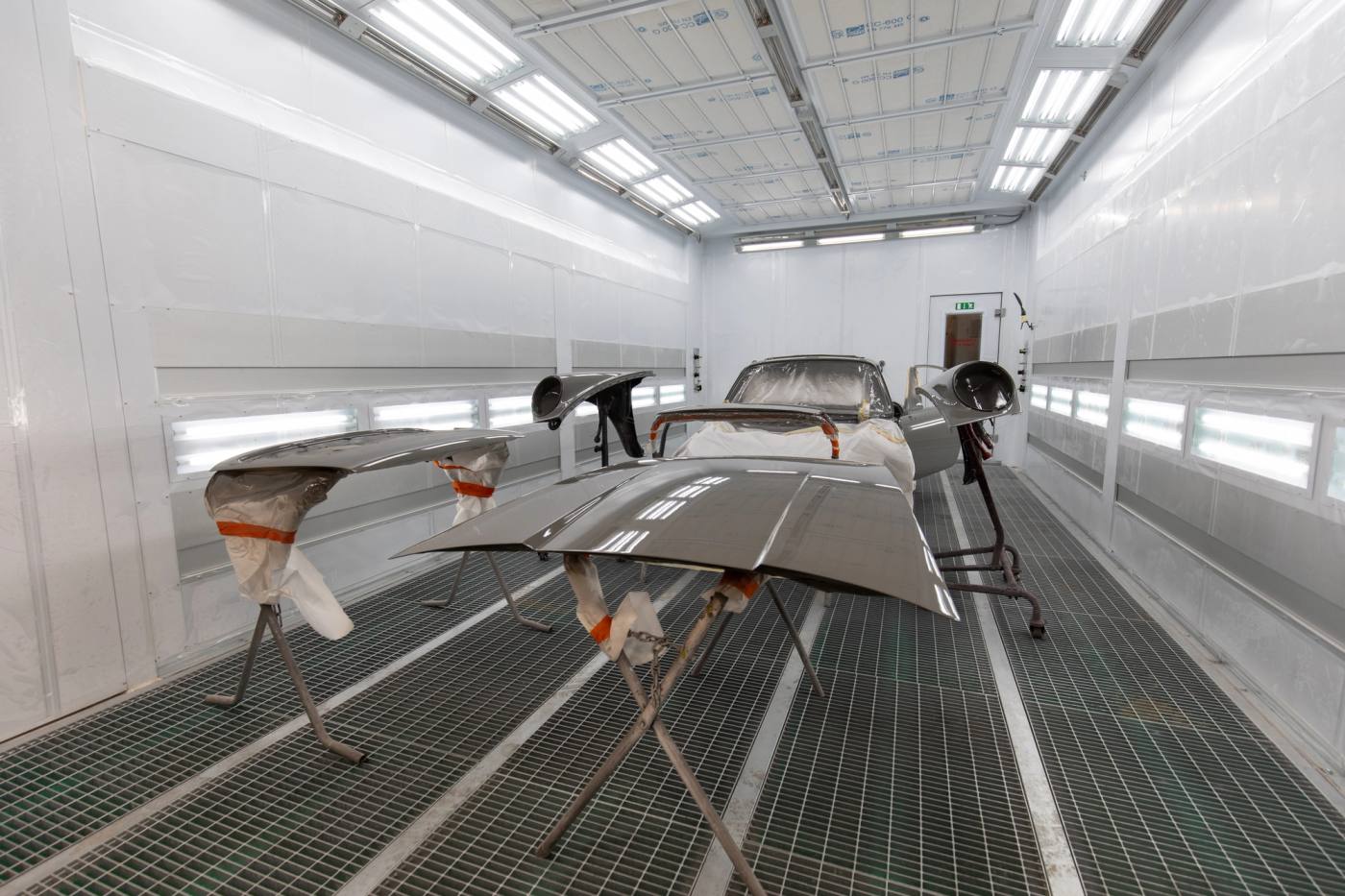
A dent the size of a dinner plate sometimes gets fixed in an afternoon. A crease half that size sometimes means the whole panel comes off and a new one goes on. The size of the damage isn't what decides it. What decides it is where the metal is bent, what kind of metal it is, whether the part does a safety job, and what gets your car back to the way it left the factory for the right money.
So when you ask us "can you just fix it," the honest answer is "let me see where it's bent first."
Repair or replace: how do you actually decide?
We look at four things, roughly in this order: the location, the metal, the depth, and the math.
Location comes first because some panels carry load and some just hang there for looks. A door skin or a front fender is bolted or welded to structure, but the panel itself isn't usually holding the car together. A quarter panel, a rocker, or anything tied into the frame rails is a different story. The deeper the damage runs toward the bones of the car, the more we lean toward doing it by the book rather than the fast way.
Then the metal. Then how far the dent stretched and folded the steel. Then the cost, which is last on purpose, because a cheap repair that doesn't hold isn't actually cheap.
When can a dented panel be straightened?
When the metal still has its shape memory and the paint can come back clean.
Sheet metal wants to return to where it was. A shallow dent with no sharp crease, no tearing, and no flaking paint is a good candidate to massage back out, fill the low spots, and refinish. A Honda Accord that takes a parking-lot door ding or a smooth dent in the fender, with the paint intact, usually straightens and paints up so you can't find it afterward. That's the win we're always shooting for, because original factory metal that's been properly repaired is as strong as it ever was.
Where it gets harder is a sharp crease or a stretch. Once metal is stretched, it's longer than it used to be, and you can't just push it back because there's extra material now. A skilled tech can shrink it, but past a point you're chasing it forever and the panel never sits quite right. That's usually the line where straightening stops making sense.
When does a panel have to be replaced?
When the damage tore the metal, hit a structural part, or landed on a panel that's built to crush.
A few clear cases. If the metal is torn, cracked, or rusted through, there's nothing to straighten. If the dent runs into a structural seam or a frame rail, we're not bending that back to "close enough," it gets measured on the frame rack and brought back to spec or replaced. And here's the one people don't expect: a lot of modern parts are engineered to fold in a crash so they soak up energy instead of passing it to you. A bumper reinforcement bar or a crush zone that's done its job can't be straightened and re-used. It already spent itself protecting whoever was in the car.
Aluminum changes the call too. More cars and trucks use aluminum hoods, fenders, and bed panels now, and aluminum doesn't take repeated bending like steel does; sometimes it cracks in a way that can't be repaired. A creased aluminum panel on a newer pickup is far more likely to be a replacement than the same dent in old-school steel. The repair-versus-replace line moves depending on what your car is actually made of, which is why two cars with identical-looking dents can get two different answers.
Does it cost more to repair or to replace?
Sometimes repairing is cheaper, sometimes replacing is, and the surprising part is how often replacing wins.
Straightening a panel is labor. A new panel is a part plus labor to hang it, blend it, and paint it. On a simple smooth dent, repairing beats replacing easily. But on a badly creased panel, the hours of metalwork can climb past the cost of a new part that bolts on clean and straight, and you end up paying more for a worse result. A Nissan Altima rear door that's folded hard is often a faster, better, and not-much-pricier fix as a new door than as forty minutes of fighting the old one.
Your parts also shape the price. Whether we use a manufacturer part or a quality aftermarket one affects both the cost and the fit, and there are state rules about what your insurer can ask for. We broke that down in our piece on OEM versus aftermarket parts. Either way, your insurer owes a repair that returns the car to its pre-loss condition, and we write the estimate to do exactly that. If hidden damage shows up once a panel is off, that goes on a supplement, which is normal and we explain it here.
Is a repaired panel as safe as a new one?
If it's done right, and it's the right call for that panel, yes.
A properly straightened cosmetic panel is as safe as it was the day before the dent. The cases where safety is on the line are the structural ones, the frame rails, the crush zones, the reinforcement bars, and those are exactly the parts we replace rather than fudge. We measure structure on the frame rack, follow the manufacturer's repair procedures, and every repair carries a lifetime warranty. If you want the longer answer on how we make sure a car is sound when it leaves, we wrote that up too.
Not sure which way your dent will go? Send us a couple of photos through the free photo estimate and we'll tell you straight, repair or replace, before you commit to anything.
Frequently asked questions
Can any dent be repaired without replacing the panel?
No. A shallow dent with intact paint usually can. A torn, creased, stretched, or rusted-through panel, or one tied into the car's structure, often can't and shouldn't be.
Is it cheaper to repair a dent or replace the panel?
It depends on the damage. A smooth dent is cheaper to repair. A heavily creased panel can cost more to straighten than to replace, because the metalwork hours add up fast.
Does replacing a panel hurt my car's value more than repairing it?
A correctly replaced and painted panel is a sound repair, but any accident on the record can affect resale, which is a separate issue called diminished value. Whether you repair or replace, keep your paperwork.
Why does aluminum get replaced more often than steel?
Aluminum doesn't tolerate repeated bending the way steel does. Straightening a creased aluminum panel risks cracking it, so on aluminum hoods, fenders, and truck beds, replacement is more common.
