
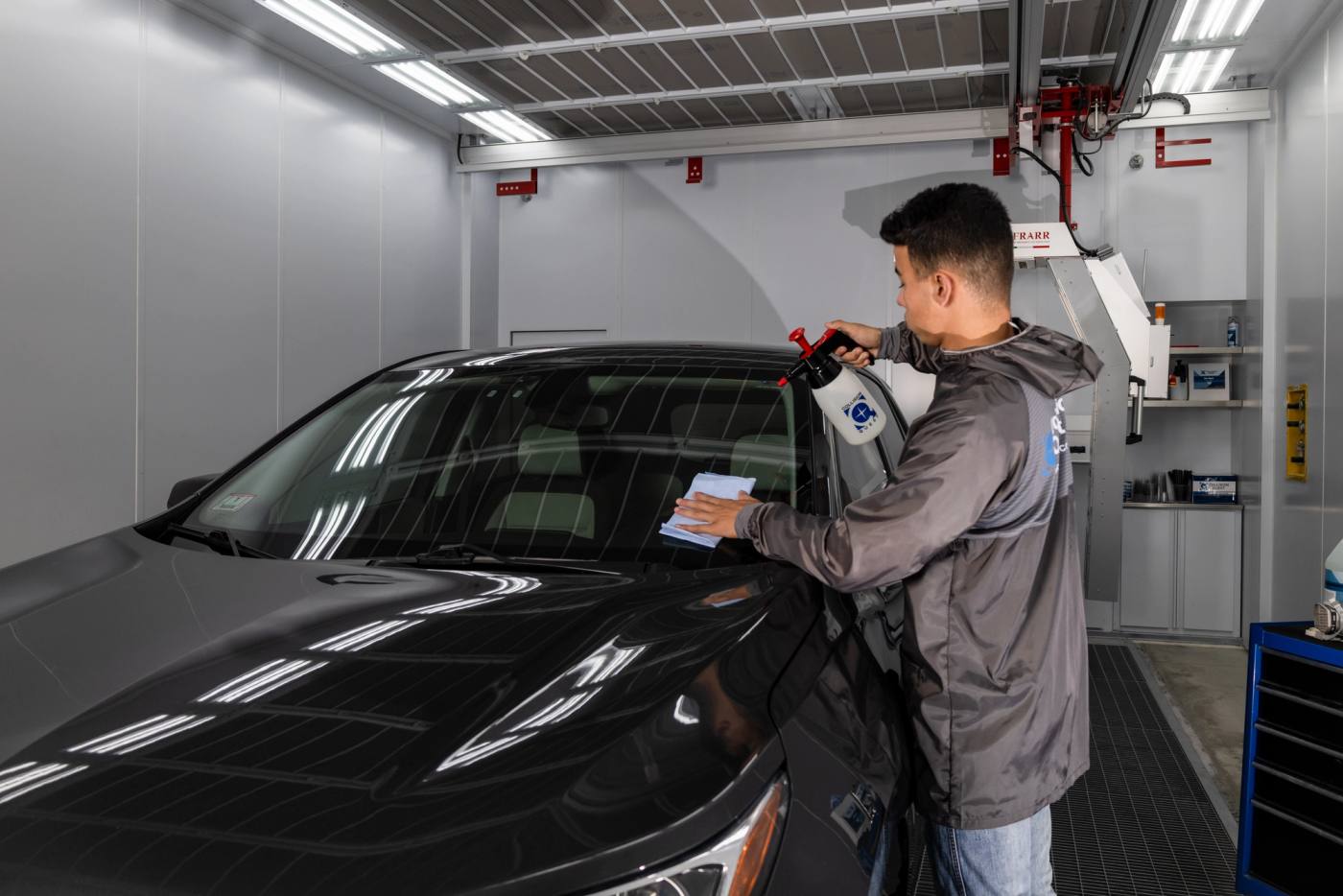
With the right paint system and a skilled painter, the repair should be invisible. The trick isn't squirting on the same factory color code and hoping it lands. It's reading your car's actual paint as it sits today, mixing to match that, and blending into the panels next door so there's no line where old meets new.
That last part is the whole game. Let me explain why.
Why doesn't the factory color code just match?
Because your car doesn't wear its factory color anymore. A paint code tells you what left the line. It says nothing about what five winters and a few thousand hours of sun did to the clearcoat since.
Paint moves. White yellows a hair. Reds go pink at the edges, and silver and gray drift in ways you'd swear you couldn't see until the new panel is sitting right next to the old one in full sun. A 2016 white F-150 and a 2023 white F-150 can roll off the same factory with the same code and look like two different cars by now. Same paint, different age, different weather.
So a shop that just pulls the code and sprays is gambling. Sometimes it works. Often it doesn't, and you get the dreaded "fixed panel" look where one door reads a touch brighter than the rest.
How does a shop actually get the color right?
It starts with the code. We pull the paint code off the door jamb or build sheet to get in the neighborhood. After that, it's measured instead of guessed.
A spectrophotometer reads the real paint on your car. You set the tool against a clean section of the existing finish and it reads the color the way light actually bounces off it, the faded, weathered, real-world version of it. That reading feeds a current PPG paint system, which spits out a custom formula tuned to your car rather than to a code in a book.
Then the part people skip. We spray a test card first, a "spray-out," and hold it against the car in real daylight before anyone touches a panel. If it's off, we adjust the mix and shoot another card. Cheap shops eyeball it. We'd rather waste a card than waste a fender.
What about metallic and pearl colors?
Those are the ones that humble people. Metallics and pearls aren't a flat color. They're flakes of metal or mica suspended in the paint, and they throw light differently depending on how the paint was laid down, how thick it went, and what angle you're standing at when you look.
You can nail the color and still miss the match if the flake doesn't lay the same way. Spray technique matters as much as the formula here. How far back you hold the gun, how many coats, how you feather it. Two painters working from the same exact mix can get two different results on a pearl white. (White, by the way, is sneaky. People assume white is easy. It's one of the hardest colors to match, because there are dozens of "whites" and your eye catches the difference instantly.) Silver sits right there with it.
What is blending, and why does it matter?
Blending is how a painter hides the seam between the new paint and the old. Instead of painting one door edge to edge and stopping dead at the body line, we feather the new color out into the panels around it.
Picture a scratched front door on that white F-150. We don't just paint the door. We carry the color a little into the front fender and the rear door, fading it out so your eye never finds a hard edge. Done right, the transition happens in the middle of a panel where you'd never think to look for it. The clearcoat then goes over the whole area to tie it together.
This is why the repair process matters before the paint ever flies. During teardown and blueprinting, we map exactly which panels get color and which get blended, so the plan is set before the gun comes out. No improvising at the booth.
Does the spray booth really affect the match?
It does, more than most people think. A clean, controlled booth is the difference between a flawless finish and one with dust nibs, runs, or an uneven cure.
Our CMC Italian infrared spray booths hold steady temperature and airflow and cure the paint evenly with infrared heat. Clean air in, contaminants out, an even cure across the whole panel. Dust is the enemy of a perfect finish, and a booth that controls the environment is how you keep it off the car. A great formula sprayed in a dirty open bay is still a compromised finish.
So will anyone be able to tell which panel I fixed?
If we did our job, no. That's the standard. Not "close enough." Not "good in shade, off in the sun." The goal is that you forget which side of the car was hit, and so does the next person who buys it.
That's the whole point of measuring rather than guessing, of testing on a card before we ever touch your fender, of blending instead of edge-painting. It's slower. It's also why the fix holds up in a parking lot at noon, which is the only test that counts.
Got a scratch or a dented panel and want a ballpark before you come in? Send us photos through our free photo-estimate tool and we'll take a look.
Frequently asked questions
Will new paint match my old, faded paint?
Yes, when the shop measures your car's current color instead of just using the factory code. A spectrophotometer reads the faded, real-world finish, a custom formula is mixed to match it, then the color is blended into nearby panels so there's no visible edge.
Why are silver and white so hard to match?
Silver is a metallic, so the metal flake has to lay the same way it does on the rest of the car, not just be the right color. White is deceptively tricky because there are many slightly different whites and the human eye catches the smallest difference instantly.
What is paint blending?
Blending means fading the new color out into the panels next to the repair instead of stopping at a body line, so your eye never finds a hard edge between old and new paint. The clearcoat then ties the whole area together.
Does my car's paint code guarantee a perfect match?
No. The code only tells the shop what color left the factory. It says nothing about how the paint has aged in the sun and weather, which is why a good shop reads the actual paint on your car and mixes to that.
How long does color matching add to a repair?
Not much. The color reading and spray-out test card happen during the repair plan, not as a separate delay, and they save time by getting the match right the first time instead of redoing a mismatched panel.
