
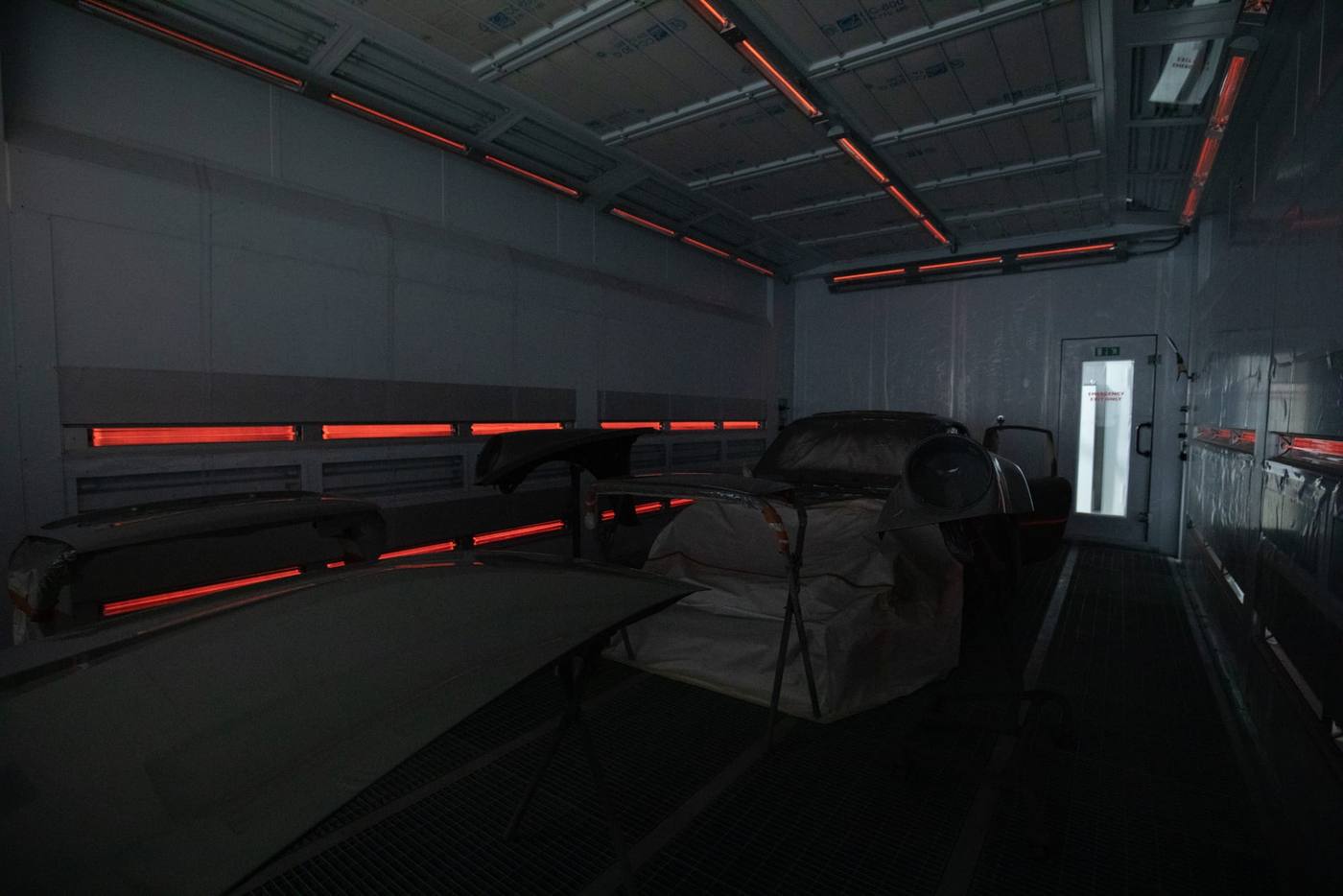
A spray booth is the part of a body shop nobody asks about. Customers ask about the estimate, the rental, the timeline. They almost never ask what their car gets sprayed in, but they probably should. The booth is where the repair becomes invisible, or doesn't. It's the difference between a panel that matches and one that's a quarter-shade off in afternoon light. As part of our commitment to excellence, we made a call: when it was time to invest, we'd buy from the company building the best equipment in the world, not the company offering the best price in the U.S. distributor catalog. That meant CMC of Italy. Today we run three CMC paint booths, including one oversized booth equipped to support paint jobs on large vehicles such as cargo vans and emergency vehicles. All three use CMC's integrated infrared (IR) curing technology. This post is for the customers, dealerships, fleet managers, and insurance partners who've asked why we made the investment, and what it means for the work that comes out the other side.
A short note on who CMC is
CMC has been building professional spray booths in Rassina, Italy since 1977. They're ISO 9001:2015 certified. Their booths are the equipment Pagani uses. Lamborghini's service operations use them. Scuderia Toro Rosso ran them. Emil Frey AG, one of Europe's largest dealer groups, runs them across multiple sites. None of those names are choosing CMC because of price. We didn't either. We chose CMC because the booth is the single piece of equipment that determines whether a finish lasts a lifetime or just a few years, and that decision is too consequential to be made on a discount.
What infrared actually does
Most spray booths in North America cure paint by warming the air around the vehicle. Gas burners heat the cabin to roughly 140°F, the warm air heats the panel, the panel heats the paint, and the coating slowly cross-links and hardens. A typical bake cycle is 30 to 45 minutes per cycle, sometimes longer for harder clears or larger panels. Through that whole window the shop is paying gas, paying electric for the air handlers, and waiting.
CMC's integrated IR works backwards from that. Instead of heating the air to heat the paint, infrared lamps deliver energy directly onto the painted surface. The coating itself absorbs the radiation. It cures from the substrate up, not from the surface down.
What that buys us, in plain terms:
- The cure cycle gets significantly faster.
- The shop burns less gas and less electric per car.
- The cure is more even across the panel. No cold corners. No baked edges.
- The paint film cross-links the way it's supposed to, which means harder, more chip-resistant, more durable finish.
- Less energy hangs around in the booth atmosphere as VOCs and excess heat, which is better for our painters and better for the building.
The oversized question
There's a reason we opted to build an oversized booth, and the reason is what's parked in the customer lots and dealer lots of Southern New England every day. Standard collision booths are sized for sedans and small SUVs. The geometry was set decades ago, when those were the cars getting hit. They're not the cars getting hit anymore. The work coming through our doors looks like this: F-250s, Silverado 2500s, Sprinter vans, Ram ProMasters, Suburbans, Yukons, Ford Transits, dealer trade-ins of every length, and the occasional emergency vehicle, box truck or step van that nobody else in the area will touch.
Most shops force these vehicles into a booth they don't fit, which means cocking the truck at angles, partial cycles, and finish quality that suffers because the airflow and the IR lamps weren't designed for that envelope. Or the shop sublets the work, which adds days and a markup. Our oversized booth takes full-length commercial vans and crew-cab pickups without compromise. For Enterprise, for the dealers we work with, for the fleet operators who need their trucks back on the road this week and not next month, that's the practical difference between us and a lot of the shops we compete with.
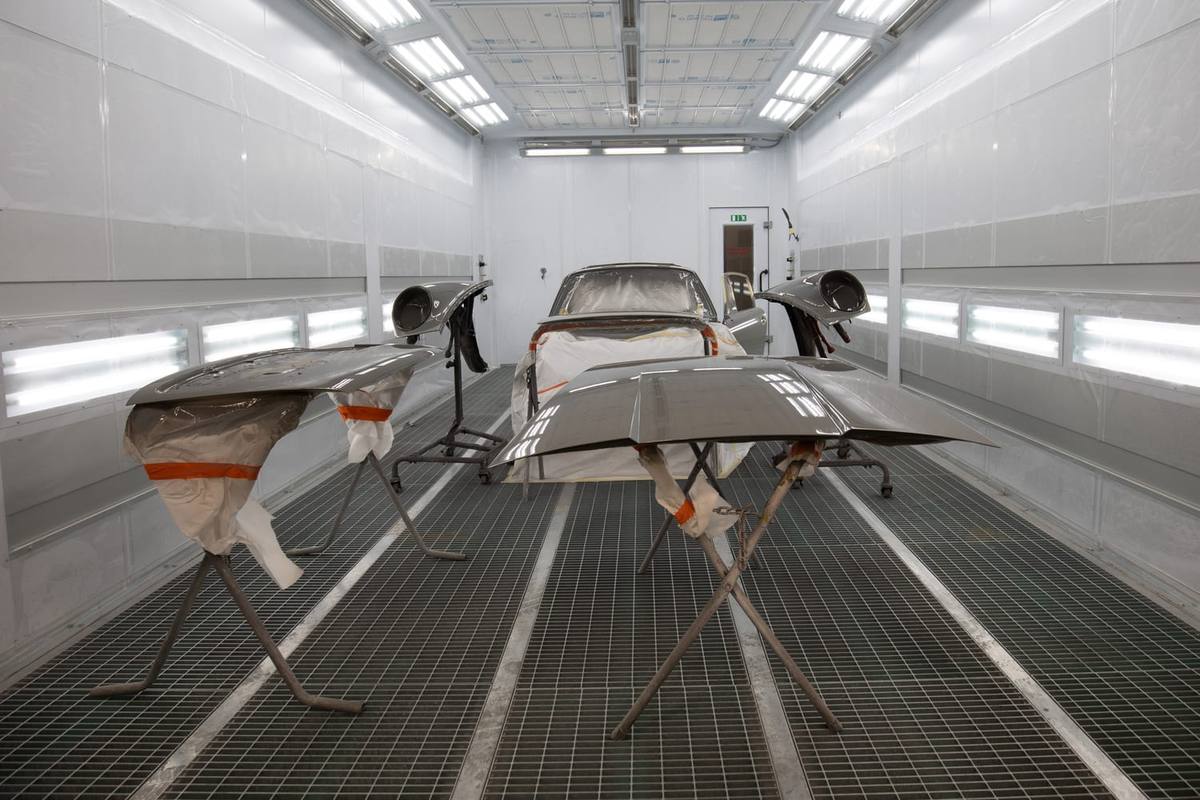
What it means for cycle time
Insurance carriers track cycle time obsessively, and they should. Every day a car sits in a body shop is a day of rental, a day of customer dissatisfaction, a day of severity creeping up. Dealerships track it for their loaner pool. Enterprise tracks it because every vehicle out of rotation is revenue lost. Faster cure means faster turn. Across our shops the IR cycle is a fraction of what conventional booths can do. We aren't going to put a number on it in a blog post because the number depends on the substrate, the clear, the panel size, and the ambient temp on a given day, but the difference is enough to matter. Multiply it across the volume Carl's Collision puts through every week and the throughput advantage is real, not theoretical.
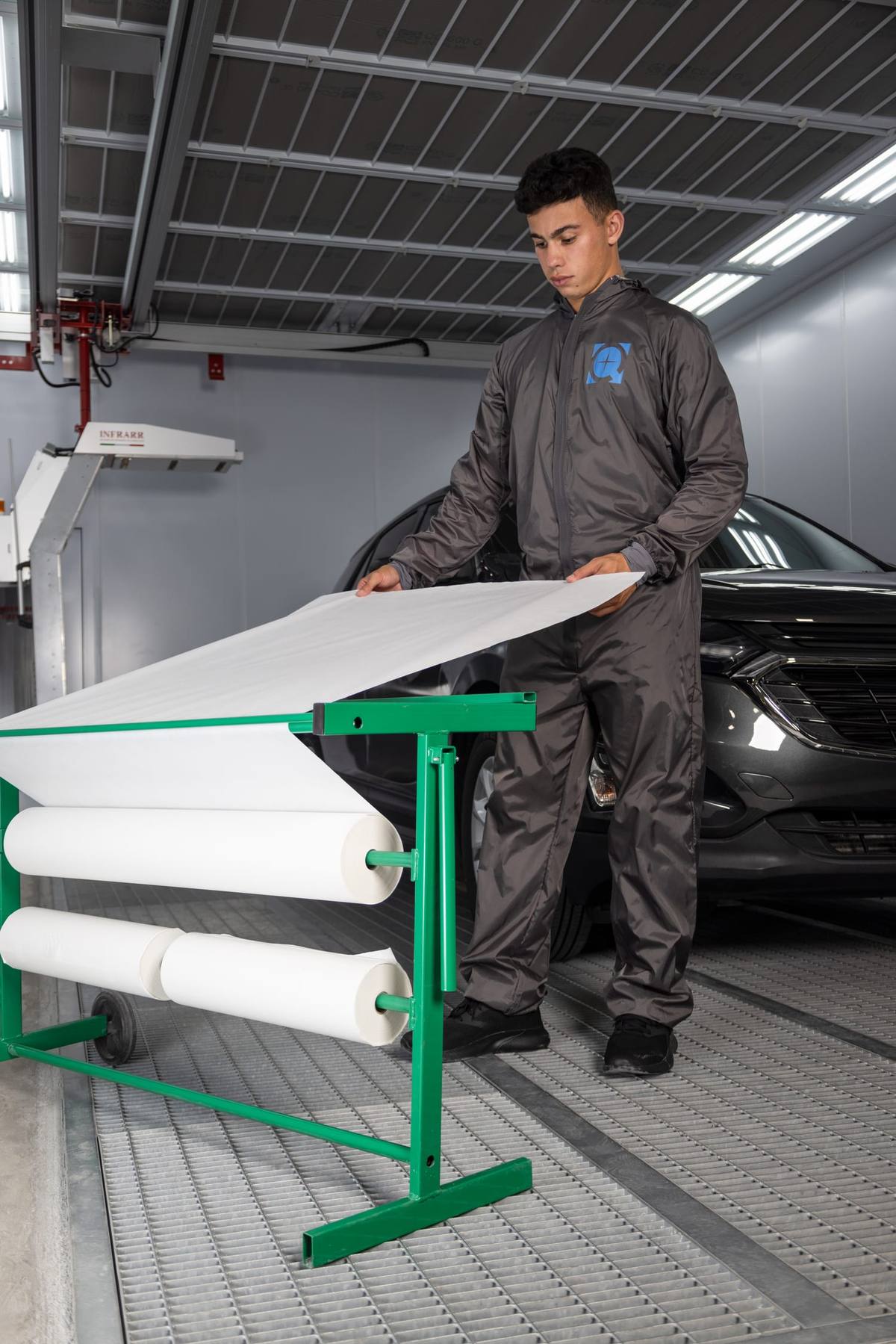
What the customer sees
This part is simpler. When you pick up the car, the panel matches. Metallic flake orientation is consistent. There's no orange peel from a half-cured clear. The finish has the depth and the gloss it should have. Six months later, after a full New England winter of road salt and sand and parking-lot dings, it still looks the way it looked the day we handed it back. We back every refinish with our shop warranty. The warranty is easier to honor when the equipment doing the work is built to do the work right.
The bigger pattern
The CMC investment isn't a one-off. It's the same logic that drove every major equipment decision at Carl's: buy the tool that produces the right outcome, even when the right tool costs three or four times what the passable tool costs. Our paint mixing systems, our scanning and ADAS calibration capability, our welders, our frame equipment. Everything we put on the floor gets bought against a standard of "what does the best shop in the country use," not "what's on sale at the jobber this quarter." That standard is also why we still have insurance partners, dealer partners, and rental fleet partners who've been with us for over a decade. The partners we keep are the ones who can tell the difference between a shop investing in capability and a shop coasting on volume.
Come see them
If you're a customer who wants to know what's behind the work on your car, stop in. We'll show you the booths. If you're an adjuster, a dealership service manager, a fleet operator, or anyone trying to figure out where the harder vehicles in your portfolio should go, call ahead and we'll walk you through. Bring an oversized truck. Watch a cycle. The booths are the easiest part of our facility to defend. Three locations: Carl's Collision Center, Fall River, MA. Carl's Collision Center, New Bedford, MA. Carl's Collision Center, Newport, RI. The booths are running today.
