
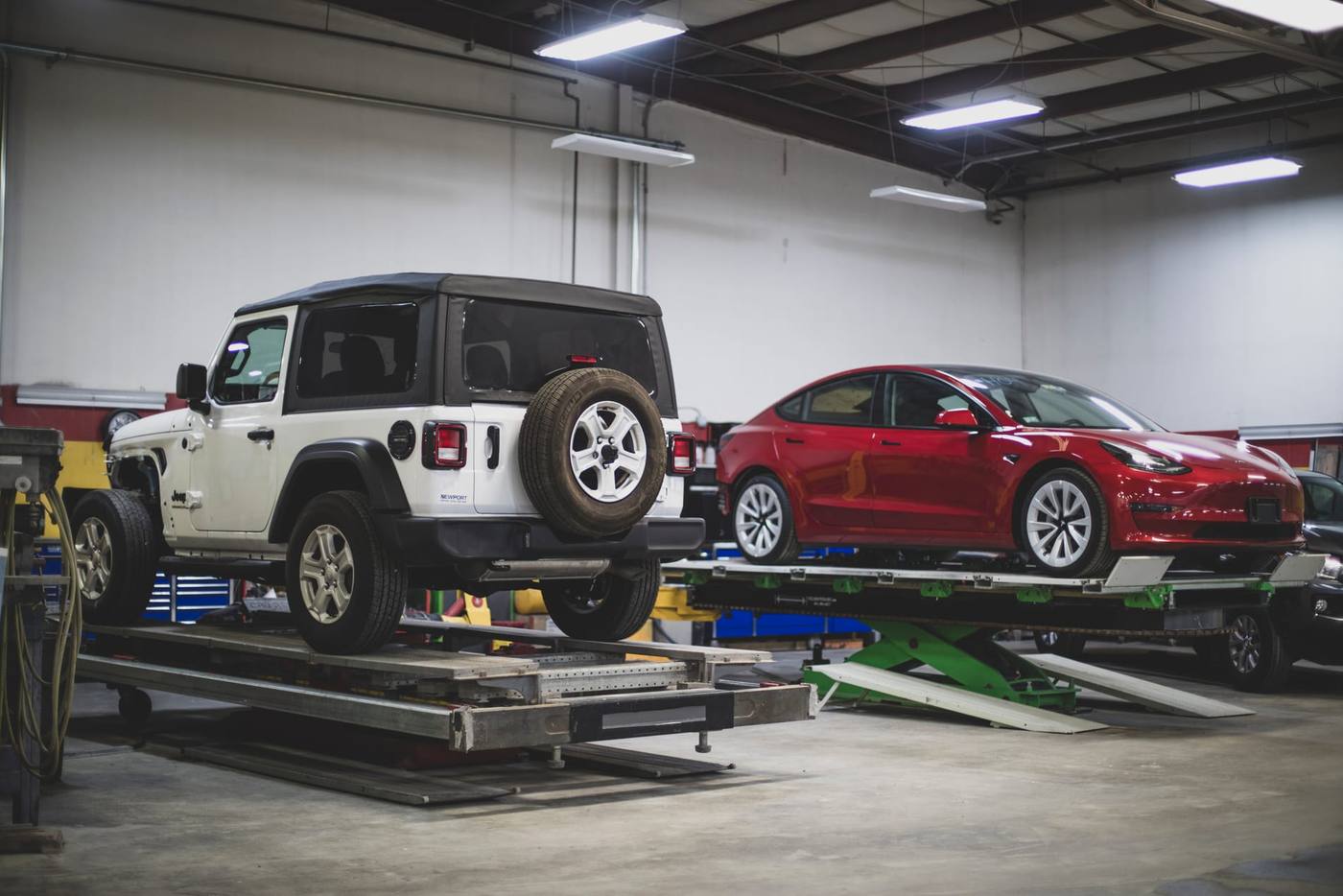
You should pick the shop that's certified to fix your exact car, trains its people to the top standard in the trade, and owns the equipment a modern vehicle needs. A friendly front desk and a low cost are important, but making sure your vehicle is safely repaired to factory standards and pre-loss condition should come first. The rest of this guide is how you check those things before you hand anyone your keys.
Is the shop certified to fix your specific car?
This is the first question, and most people never ask it.
A manufacturer certification (you'll see it called OEM, for original equipment manufacturer) means the carmaker has trained and equipped that shop to repair its vehicles the way the factory says they should be repaired using factory parts. Carmakers always specify how to properly conduct repairs, down to which welds to make and which adhesives to use. A 2024 Tesla and a 2015 Civic are not the same job, and a shop set up for one isn't automatically set up for the other.
Ask whether the shop holds the certification for your vehicle. Carl's Collision holds more than 20 manufacturer certifications, including Tesla and Mercedes-Benz, which are two of the harder ones to earn.
How well-trained are the people doing the work?
Certifications cover the shop. Training covers the hands doing the work.
There are two things to look for. I-CAR Gold Class is the highest training standard in collision repair, and only a small slice of shops in the country hold it. ASE certification means individual technicians have passed national exams in their specialty. A shop can have decent equipment and still hire inexperienced or untrained employees. The training standard tells you who's actually swinging the tools.
Carl's Collision is an I-CAR Gold Class shop with ASE-certified technicians.
Does the shop have the equipment a modern car needs?
Newer cars are computers with crumple zones, and the repair has to respect that.
Start with ADAS. That's the suite of driver-assist sensors and cameras built into your windshield and bumpers: automatic emergency braking, lane-keep assist, blind-spot warning, adaptive cruise. When a shop replaces a windshield or straightens a bumper, those sensors have to be recalibrated so they aim exactly where the factory set them. Skip it, and your car might read a stopped truck as fifty feet farther off than it really is. Your automatic emergency braking trusts that sensor. A bad calibration is a safety problem. If you want the long version of why a newer car is a different repair job than the one you drove five years ago, we wrote one.
Then the paint and the booth. Ask whether the shop has clean, modern spray booths and a current paint system, because color matching is where cheap work shows. A 2019 silver mixed on outdated gear won't land the same as the silver on the panel next to it.
Carl's Collision runs ADAS calibration in-house, paints in CMC Italian infrared spray booths, and color-matches on the PPG paint system using state-of-the-art technology. When we're done with the work, our goal is that someone else will never even know what panels we repaired, because they look the same as when your vehicle left the factory.
Who decides where your car gets fixed, you or the insurer?
You do.
Your insurance company can suggest a shop. It can't require one, in Massachusetts or Rhode Island. If an adjuster steers you somewhere and makes it sound mandatory, it's worth knowing your rights. We wrote a separate piece on preferred-shop and anti-steering rules.
What you want from a shop on the insurance side is simple. Do they bill the insurer directly and handle the claim paperwork, so you're not stuck running messages between two parties? Carl's Collision does direct billing and claim handling.
Will they show you the estimate and explain a supplement?
A good shop puts the numbers in front of you and doesn't flinch when you ask questions.
Free estimates should be the baseline. So should plain answers. The word that trips people up is "supplement." A supplement is an added charge that shows up after teardown, once the techs pull a panel and find damage that wasn't visible from the outside. A bent frame rail behind a clean-looking bumper. A cracked bracket under the fender. It isn't the shop padding the bill. It's the shop finding what the parking-lot estimate couldn't see. The honest move is to flag it, document it for the insurer, and tell you before the work goes ahead. We map out where teardown fits, drop-off to pickup, in our walkthrough of the collision repair process.
Carl's Collision does free estimates, and there's a photo-estimate tool on our site if you'd rather start from your phone before driving over.
What warranty backs the repair?
A shop that stands behind its work will tell you how long it backs the repair. Some shops warranty the paint, some the workmanship. Get the answer before the work starts, not after.
Carl's Collision offers a lifetime warranty on all repairs. If something isn't right with the work we did, we make it right.
How long have they been doing this?
Longevity isn't everything, but a shop that's survived decades in the same market has done something right.
Read the reviews, then look at how long the doors have been open. Carl's Collision has been family-owned and fixing cars since 1994, with three locations now across the SouthCoast and Newport. Thirty years in one trade is its own kind of reference.
Run this list on whoever you're considering. Check the boxes and you're in good hands. If a shop gets cagey about certifications or warranty, that tells you something too.
When you're ready, a free estimate from Carl's Collision costs you nothing but the drive over. You can also send photos first and we'll get back to you.
Frequently asked questions
What does I-CAR Gold Class mean?
It's the highest training standard in collision repair. Only a small percentage of shops earn it, and it tells you the staff is trained to current industry procedures.
Can I use a shop my insurance doesn't recommend?
Yes. In both Massachusetts and Rhode Island, you choose the shop. Your insurer can suggest one but can't require it.
Are estimates free?
At Carl's Collision, yes. You can also use our online photo-estimate tool to start from home before you come in.
What is ADAS calibration, and do I need it?
ADAS is your car's set of driver-assist sensors and cameras. After many repairs they have to be recalibrated so they aim correctly. An uncalibrated sensor can misjudge distance, which is a safety problem, not a cosmetic one.
